Quiet Mind Creative
What "Quiet Mind" Means to Us
Quiet Mind is not about minimalism or a particular design style. It is about the confidence that comes from knowing the work is handled.

“Quiet Mind” can sound like a design philosophy.
Something minimal.
Something quiet.
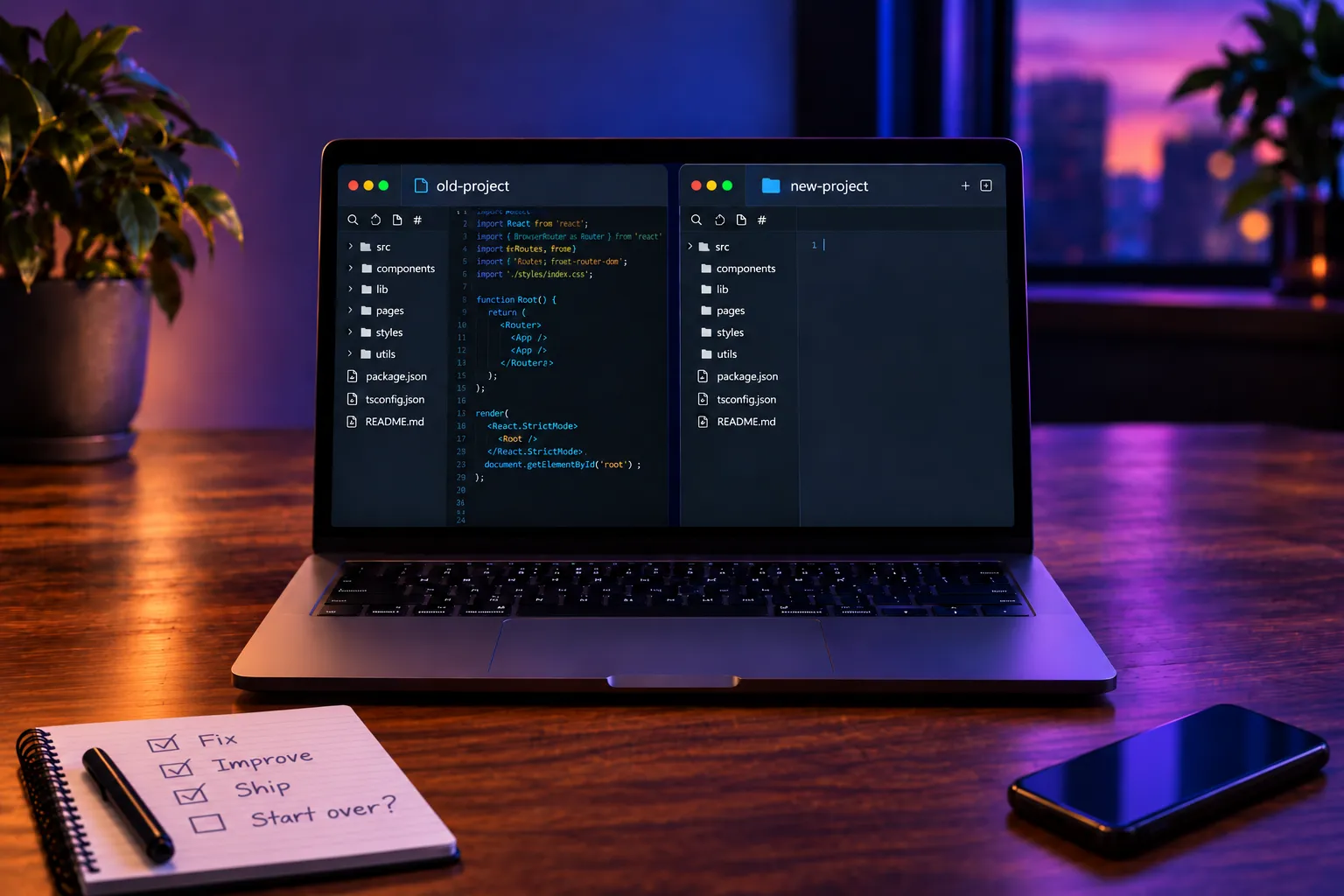
Maybe lots of white space, soft colors, and a carefully placed houseplant.
That is not really what we mean.
To us, Quiet Mind means something much simpler:
Relax. We’ve got this.
Not because nothing will ever go wrong.
Not because building software and websites is somehow effortless.
And definitely not because every project should look calm and understated.
It means you should be able to hand us a problem and feel confident that someone competent owns it.
The best client experience is not having to babysit the work
Most people do not hire a designer or developer because they want another project to manage.
They already have a business to run.
They have customers, employees, deadlines, budgets, marketing, operations, and about a hundred other things competing for their attention.
The website is important.
The software is important.
But ideally, once the work is in capable hands, it stops taking up quite so much space in their head.
You should not have to wonder whether anyone saw your email.
You should not have to repeatedly ask whether something is still on schedule.
You should not have to discover at launch that nobody tested the form on a phone.
You should not need to become a web developer just to make sure the web developer is doing the job.
That is the experience we are trying to create.
Confidence comes from competence
Peace of mind is not something you can manufacture with friendly emails and polished project management software.
At some point, the work actually has to be good.
The design needs to communicate clearly.
The website needs to work on real devices.
The code needs to be maintainable.
Forms need to submit.
Layouts need to hold together when the content changes.
Accessibility, performance, browser behavior, error states, deployment, and all the less glamorous details still matter.
A big part of good product work is noticing the things the client should not have to notice.
That does not mean overengineering every project.
It means understanding what matters, making deliberate decisions, and following the details all the way through.
Clear communication is part of the work
Good work can still be stressful when nobody knows what is happening.
So “we’ve got this” also means keeping people informed.
If something changes, we say so.
If a decision has tradeoffs, we explain them.
If a request is larger than it first appears, we talk about scope before quietly turning it into an unpleasant surprise.
If we think an idea is going to cause a problem, we say that too.
Clients do not need a stream of technical jargon.
They need enough information to make good decisions and understand where things stand.
The goal is not constant communication.
It is useful communication.
Ownership matters
There is a difference between completing assigned tasks and owning an outcome.
If somebody asks us to build a contact form, the job is not finished because the form appears on the page.
Does it validate correctly?
What happens while it is submitting?
What happens when submission fails?
Does the success state make sense?
Does it work on a phone?
Where does the message go?
What happens if that system breaks later?
Those questions are part of the work too.
Ownership means following the problem beyond the most literal interpretation of the request.
It also means knowing when not to expand the scope.
Sometimes the right answer is to fix the thing we were hired to fix and leave everything else alone.
Good ownership is not doing more for the sake of doing more.
It is making sure the thing we agreed to deliver is actually complete.
Quiet Mind is not a visual style
This one is important.
A company called Quiet Mind could very easily end up looking like a meditation app.
That is not what we are building.
Peace of mind describes the experience of working with us.
It does not dictate the aesthetic.
A project can be loud, playful, colorful, experimental, editorial, technical, weird, restrained, or something we have never tried before.
The design should fit the product and the people using it.
We like strong typography.
We like interesting interactions.
We like websites with a point of view.
“Quiet” does not mean boring.
It means the work itself should not create unnecessary anxiety.
Sometimes good work means saying no
Another part of earning trust is not automatically agreeing with every idea.
Sometimes a full rebuild is unnecessary.
Sometimes an animation makes the interface worse.
Sometimes a new feature is not worth the added complexity.
Sometimes the deadline, budget, and desired scope simply do not fit together.
It would be easier in the moment to say yes.
But confidence disappears pretty quickly when every answer is yes until the project runs into reality.
We would rather make the tradeoff visible early.
Then we can make the decision together.
The work should reduce uncertainty
That is probably the thread running through all of this.
A good design decision removes ambiguity.
A good technical decision reduces failure.
A good process makes the next step clear.
A good estimate gives everyone realistic expectations.
A good handoff means the client knows what happens after launch.
None of those things are especially flashy.
Together, they create something valuable:
Confidence.
You know what is being built.
You know why decisions are being made.
You know where the project stands.
And you know somebody is paying attention to the details.
That is what Quiet Mind means to us.
Not “nothing to worry about.”
Something better:
You do not have to worry about this one.